
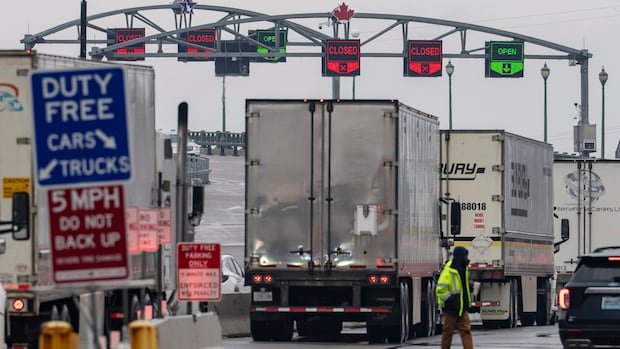

Enforcement of cross-border cargo has significantly increased during the Trump administration, causing delays and financial burdens, according to shippers. The implementation of tariffs along the 49th parallel has led to heightened scrutiny and penalties in the transportation industry, reflecting a more protectionist stance in the United States.
Breanna Leininger, who oversees U.S. operations at Pacific Customs Brokers in Vancouver, described the shift as substantial. The volume of documentation requested by border officials for shipped goods has surged tenfold compared to previous years. Leininger noted a notable increase in customs inspections, with a shift from occasional instances to daily occurrences for the 5,000 customers she serves.
Importers are now required to provide more extensive paperwork, including labor and manufacturing records, to demonstrate compliance with product classifications and trade agreements. The level of proof and the items subject to tariffs appear to be evolving regularly, creating challenges for businesses.
Data from U.S. Customs and Border Protection indicates a 26% increase in audits compared to the previous year. In the first half of the current year alone, customs authorities collected $70.6 million in trade penalties, marking a significant surge from previous years.
The stricter enforcement measures coincide with escalating trade tensions between Canada and the U.S., resulting in additional delays and costs for businesses engaged in cross-border trade. Alan Dewar, the executive vice-president at GHY, highlighted the substantial financial implications of these challenges, including warehouse costs and service charges incurred due to delays.
According to Leininger, while many businesses have managed to navigate the heightened enforcement, some have found the situation too daunting to continue. U.S. Customs and Border Protection emphasized the importance of importers providing accurate and complete information to facilitate trade procedures.
Overall, the current trade environment underscores the complexities and uncertainties facing businesses engaged in cross-border commerce, with ongoing adjustments in enforcement practices impacting various industries.