
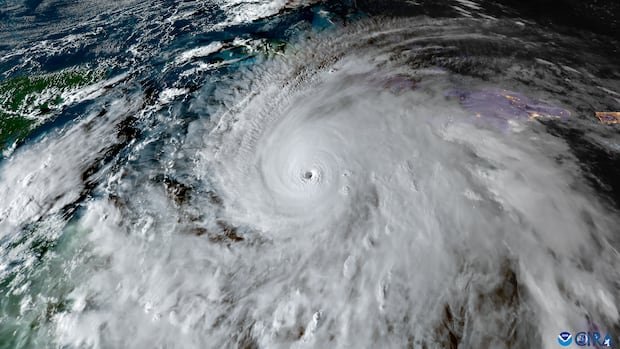

As of the current moment, the Atlantic hurricane season has seen only six named storms, with most of them being short-lived. This raises questions about the lack of hurricane activity this year. The main culprit for this calm season seems to be the powerful El Niño event, according to Phil Klotzbach, a senior research scientist at Colorado State University.
El Niño is a significant part of a natural climate cycle known as the El Niño-Southern Oscillation (ENSO), affecting both oceanic temperatures in the central Pacific and atmospheric wind patterns. When the central Pacific Ocean experiences temperatures 0.5 degrees Celsius above average over a specific period, it signifies an El Niño event. Conversely, temperatures 0.5 degrees Celsius below average indicate a La Niña event, with global implications.
The ongoing “super” El Niño is currently suppressing Atlantic hurricane formation. Weather experts have issued an El Niño advisory, with some models predicting this event to be historically strong. Lindsey Long, a meteorologist at the U.S. National Oceanic and Atmospheric Administration (NOAA), highlighted the potential for record-breaking anomalies, possibly exceeding the previous high set in 1982 and 1983.
Despite the quiet hurricane season in the Atlantic, forecasters anticipated this trend earlier in the year. NOAA initially forecasted a range of eight to 14 named storms and three to six hurricanes, which was later revised to seven to 13 named storms and two to six hurricanes in August.
The influence of El Niño in the Pacific Ocean contrasts with its impact on the Atlantic. While the Atlantic basin has experienced minimal hurricane activity, the Pacific has seen a total of 16 named storms to date. Tropical Storm Fay, which nearly reached hurricane strength, formed further north than is typical for Atlantic hurricanes.
Although El Niño has subdued hurricane activity in the Atlantic, there have been brief tropical storm occurrences in the Gulf of Mexico affecting coastal regions, such as Louisiana. The current El Niño is expected to peak towards the end of 2026, persisting into 2027, with uncertainties about its implications for the upcoming hurricane season.
In the aftermath of El Niño events, the subsequent year usually experiences reduced El Niño effects and warmer Atlantic conditions. Therefore, the outlook for the next hurricane season remains uncertain, as noted by Klotzbach.