
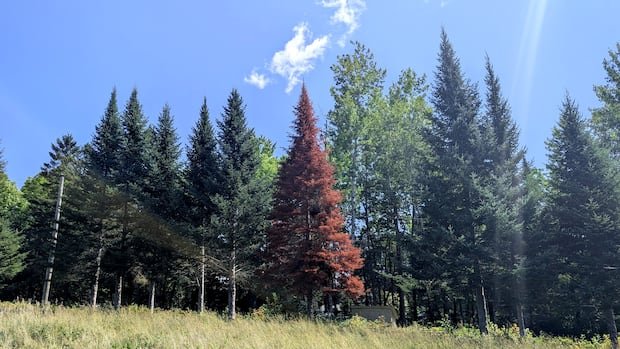

Balsam fir trees in New Brunswick are exhibiting a concerning phenomenon of turning red and perishing following last summer’s exceptionally dry conditions, sparking worries about the fate of these iconic trees in the province. Professor Anthony Taylor from the University of New Brunswick, specializing in forestry research, has been actively engaging with woodlot owners and witnessing the detrimental effects firsthand. The lush balsam firs, commonly sought after as Christmas trees, are gradually transitioning to a red, desiccated state, ultimately succumbing to the harsh conditions induced by the drought.
According to Prof. Taylor, the observed pattern aligns with previous instances of balsam fir decline documented after periods of hot and arid weather. He emphasized the adverse impact of warm, dry climates on the growth capacity of balsam fir trees. Through his extensive research on climate change’s effects on New Brunswick’s forests, Taylor noted similar die-offs of balsam firs following notably dry summers in 1986 and 2018.
In response to drought conditions, the trees halt the photosynthesis process prematurely, impeding their growth. Taylor explained this interruption prevents the generation of essential energy reserves needed for basic metabolic functions and defense mechanisms. Consequently, the trees become vulnerable to stressors like insects or pathogens, heightening the likelihood of extensive die-offs. The balsam firs’ shallow root systems further exacerbate the situation, making it challenging for them to access crucial water resources during dry spells.
Peter McKeil, a woodlot owner in Burtt’s Corner, noticed the impact of the drought on his balsam firs early on, observing a progressive reddening of the trees from their lower branches upwards. He estimated a loss of approximately 100 trees so far and has adjusted his harvesting practices to salvage value from the remaining firs before further deterioration occurs. McKeil expressed concerns about the species’ future viability amidst escalating climate change impacts, particularly in southern New Brunswick, suggesting a potential northward migration due to changing environmental conditions.
Reflecting on the visible effects of the red trees as a tangible outcome of a shifting climate, Prof. Taylor underscored the urgent need for climate action. He likened the situation to a canary in a coal mine, serving as a clear indicator of the broader climate crisis. Taylor’s research aims to raise awareness and drive transformative change, emphasizing the imperative to transition away from fossil fuels and adopt sustainable forest management practices to mitigate the escalating impacts of climate change on New Brunswick’s iconic balsam fir trees.