
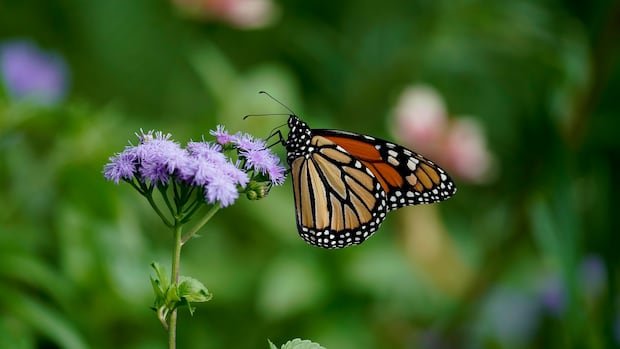

MaryAnn Lepp witnessed an unprecedented number of monarch butterflies undergoing their transformative process in her garden, observing 20 caterpillars feasting on her swamp milkweed in a single day this week. She is just one of many Canadian monarch enthusiasts who are experiencing a surge in backyard milkweed patches thriving due to the wet and hot conditions in parts of the Prairie this summer.
Expressing her excitement, Lepp eagerly searched for monarch cocoons in her garden in La Broquerie, approximately 60 kilometers southeast of Winnipeg, exclaiming, “This is chrysalis No. 2. We’ve seen a lot more butterflies this year than we have in the past.”
While conservation experts cannot definitively attribute the surge to favorable weather conditions, they acknowledge the numerous reports of caterpillars, chrysalises, and monarch butterflies as a positive sign for the federally endangered species known for their remarkable annual migration between Canada and Mexico.
Marika Olynyk, curator of the Living Prairie Museum, noted the abundance of monarchs in Winnipeg this year, emphasizing the continuous presence of caterpillars, chrysalises, and butterflies throughout the summer. The prairie museum’s tall grass preserve boasts a variety of native plants that pollinators, including monarch butterflies, favor, such as different milkweed species.
Although monarch butterflies primarily feed on nectar from milkweed flowers, they can also obtain sustenance from various flowering plants. However, during the caterpillar stage, monarchs are selective in their diet, exclusively consuming milkweed leaves.
Despite efforts by individuals like Lepp to plant milkweed and native wildflowers, these plants are not as prevalent or widespread as they once were due to the conversion of native grasslands to farmland. Habitat loss remains the primary threat to monarchs, with Olynyk highlighting the significant decline in tallgrass prairie across North America.
In response to growing concerns, the federal government elevated the legal status of monarchs from “special concern” to “endangered” in 2016. To protect the species, it is now illegal to harm or capture monarchs at any stage of development on federal lands.
Monarch populations are closely monitored, with researchers estimating their numbers based on the acreage of trees covered with monarchs in the forest wintering grounds in Mexico. Despite conservation efforts and increased awareness, the monarch population remains below sustainable levels, indicating the ongoing need for conservation initiatives.
The Assiniboine Park Zoo has also witnessed an uptick in monarch numbers, with Laura Burns, conservation programs manager at the zoo, highlighting the positive conditions for the critically endangered Poweshiek skipperling butterfly. The zoo’s breeding and release programs aim to bolster the Poweshiek skipperling population, offering hope for the species’ recovery.
Amid these conservation efforts, zoo staff will deploy radio transmitters on monarch adults this fall as part of a project by the Canadian Wildlife Service to track their migration to Mexico. Enthusiasts like Lepp remain dedicated to ensuring that caterpillars and chrysalises under their care have the opportunity to metamorphose into butterflies and embark on their journey.
By fostering a connection with nature and preserving biodiversity, individuals like Lepp play a crucial role in safeguarding species like monarch butterflies and contributing to environmental conservation efforts.