
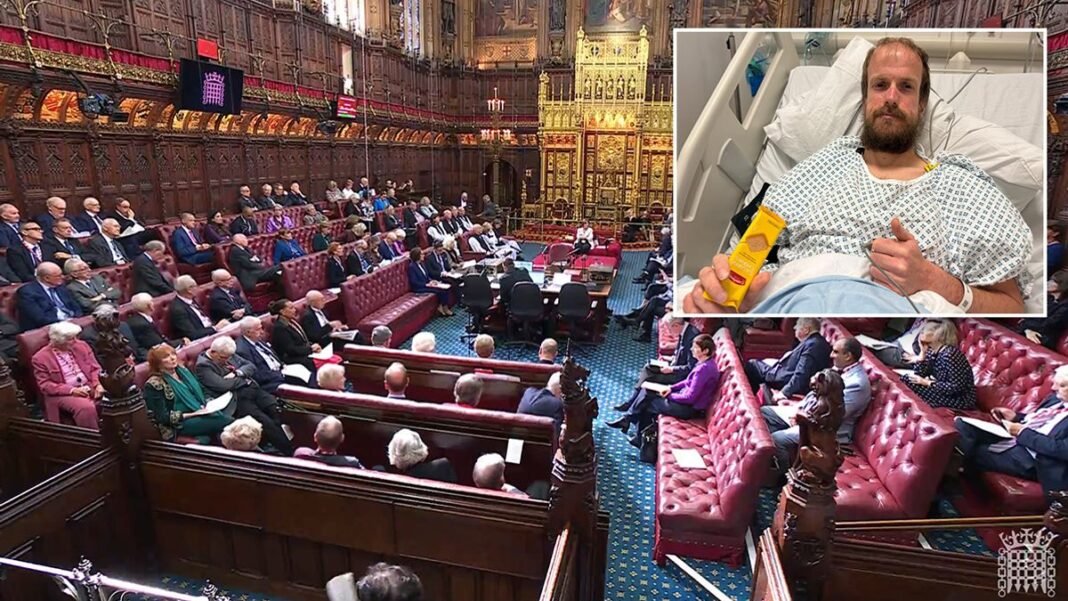

The House of Lords has been cautioned that the assisted dying Bill may face time constraints in its journey to becoming law due to an unprecedented number of proposed changes. Widow Louise Shackleton, who attended the recent debate, expressed her astonishment at the proceedings in the House of Lords.
Members of the House of Lords have tabled nearly 1,000 amendments to the Terminally Ill Adults (End of Life) Bill, with seven opponents submitting a total of 579 amendments. This bill, aimed at leading the UK out of the European Union, has accumulated a total of 820 proposed amendments.
Terminally ill advocates have accused the Lords of attempting to derail the bill, which has already been approved by the Commons and is now at the committee stage in the Lords. Over 100 terminally ill individuals and bereaved families have penned letters to members of the House of Lords, urging them to prioritize the voices of those approaching the end of life as the Bill progresses to the Committee Stage.
Louise Shackleton, 58, from North Yorkshire, who faced a lengthy legal process after accompanying her husband suffering from Motor Neurone Disease to Dignitas, criticized the Lords for employing tactics to obstruct the Bill’s progress.
Baroness Scotland of Asthal stressed the importance of compassion and understanding during the debate, emphasizing the real suffering experienced by individuals dealing with end-of-life diagnoses.
During the discussion, Ed, an 82-year-old diagnosed with a terminal brain tumor, voiced support for the assisted dying bill, advocating for individual choice in end-of-life decisions. Peers have initiated detailed scrutiny of the Bill over four Fridays, amid concerns raised by the Dignity in Dying group about potential deliberate time-wasting tactics.
Despite calls for legislative alignment, some peers have criticized the Bill’s current form as flawed, questioning its readiness for passage. The ultimate enactment of the historic Bill hinges on agreement between the House of Commons and the Lords before the parliamentary session concludes in the spring.
Baroness Gisela Stuart highlighted multiple flaws in the Bill, suggesting that the current version may not be passable in its legislative form. Concerns have been raised that the extensive amendments proposed by the Lords could lead to delays in the Bill’s progress.
Individuals directly impacted by terminal illnesses have shared their apprehensions, expressing the urgency of passing the Bill to alleviate suffering. The public consensus supporting the Bill further underscores the critical nature of the ongoing deliberations in the House of Lords.