

Most individuals find it unacceptable for the House of Lords to delay a bill once it has been approved by MPs in the Commons.
A survey conducted by Dignity in Dying revealed that 58% of respondents believe it is not appropriate for the Lords to obstruct a Bill passed by the Commons, while only 17% think it is acceptable. Additionally, just 24% support the idea of the Lords introducing damaging amendments.
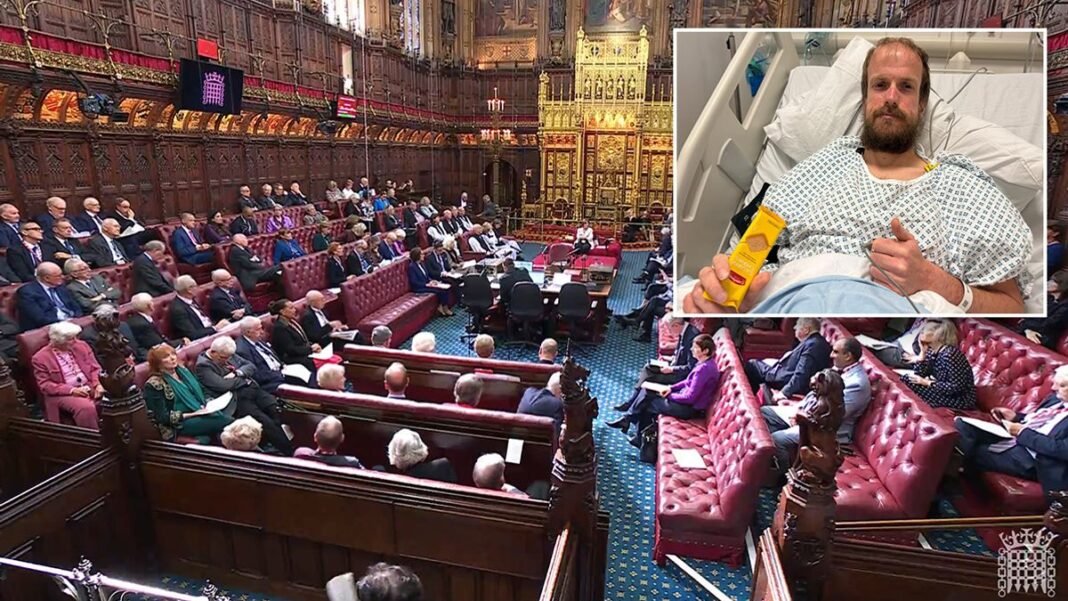
The Committee Stage commenced in the Lords today, following the creation of nearly 1,000 amendments by the chamber. Criticism has been directed at the House of Lords for potentially undermining the Assisted Dying bill by overwhelming it with a record-breaking 942 amendments.
A terminally ill music teacher expressed concern that if the End of Life Bill is hindered due to parliamentary maneuvers, it would deeply sadden him. The teacher, aged 39 and with limited time left, shared his fears of experiencing excruciating pain in front of his family.
Nathaniel Dye, an MBE recipient from east London for his advocacy, emphasized the urgency of the bill, citing the daily suffering of twenty individuals due to lack of pain management. He stressed the importance of timely legislation for himself and others facing similar situations.
The terminally ill, including Nat, who is battling stage 4 incurable cancer, are urging Peers to prioritize their voices and experiences in the decision-making process.
A call for respectful consideration is echoed by individuals like Jenny Carruthers from Bath, who desires a peaceful end with her children by her side, contrasting the agonizing death her partner endured from cancer.
The emotionally charged plea emphasizes the urgent need for legislative action, with terminally ill individuals and their families emphasizing the importance of being heard in critical end-of-life decisions.
Proposed amendments by various Lords aim to address specific criteria for assisted dying, highlighting the complexity and sensitivity of the debate.
Dignity in Dying CEO, Sarah Wootton, emphasizes the responsibility of Peers to focus on the real impact on people’s lives affected by current laws, urging for respectful consideration of terminally ill individuals’ wishes.
The emotional testimonies of individuals like Louise Shackleton, who accompanied her husband to Dignitas due to his suffering from MND, underscore the heartbreaking decisions faced by families in the absence of compassionate end-of-life options.
The push for legislative change is driven by personal experiences, as families like Louise’s stress the need for humane and timely decisions to prevent unnecessary suffering and isolation.
The public and Commons’ support for the Bill is highlighted, as challenges in the legislative process are viewed as obstructive and harmful to those in dire need of compassionate end-of-life options.